Standards-Based Verification
See whether your design meets applicable standards and agreed project requirements, and where changes may be needed.
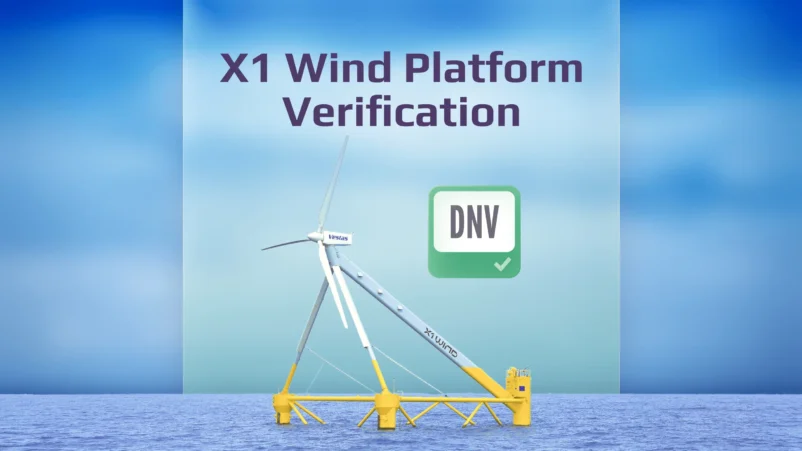
How X1 Wind Accelerated DNV Verification for Floating Wind Platform with Up to 1.2 Million Elements
Read Full Story
Fatigue and Weld Assessment Support for the MMC240 3D Crane
All Projects
SDC Verifier 2026 R2: New Standards, Multiaxial Fatigue, and 3D View
Read Full ArticleHow X1 Wind Accelerated DNV Verification for Floating Wind Platform with Up to 1.2 Million Elements
Read Full StoryFatigue and Weld Assessment Support for the MMC240 3D Crane
All ProjectsSDC Verifier 2026 R2: New Standards, Multiaxial Fatigue, and 3D View
Read Full ArticleIndependent structural verification and optimization for complex equipment and structures.
Our engineering team checks designs against applicable standards and project requirements, evaluates structural performance across relevant project stages, and identifies opportunities to improve weight, material use, and cost efficiency.












A design can look sound on paper and still raise important questions when real loads, engineering requirements, and practical constraints come into play. Some are worth resolving before the project moves forward.
Complex structures face different loading conditions during fabrication, lifting, transportation, and operation. We assess their structural performance against applicable engineering standards and customer requirements.
Whether your project follows EN 13001, FEM 1.001, Eurocode, AISC, DNV, ABS, or other requirements, we verify the relevant structural criteria and identify areas requiring attention before approval.

A design can meet structural requirements and still be unnecessarily heavy or costly. We evaluate changes that may improve performance and reduce material use, structural weight, or associated costs.
Our engineering consulting team helps turn your project goals into a clear verification plan, covering the relevant stages from design and fabrication to transportation and operation.

Tell us what you’re trying to achieve, even if the technical requirements aren’t clear yet. Our engineers help define the work needed to get there.
We identify the relevant stages, from basic and detailed engineering to assembly, lifting, temporary supports, SPMT or vessel transportation, installation, and operation.
We review drawings, models, loads, and required deliverables, confirming applicable standards such as EN 13001, FEM 1.001, Eurocode 3, AISC 360, or relevant DNV/ABS rules.
We define the modelling strategy, required calculations, project milestones, and reporting schedule, aligning the engineering scope with the agreed timeline and budget.
We check strength, buckling, fatigue, deformation, and critical connections against the applicable criteria. Where included, we evaluate options to optimize weight, material use, or structural performance.
At agreed milestones, we provide documented results, critical findings, and practical recommendations for design changes or further verification. Third-party review support can also be included.
Get the engineering evidence to move forward with confidence across the agreed project stages, from fabrication and transportation to commissioning and operation, with opportunities to reduce unnecessary weight and project costs.
See whether your design meets applicable standards and agreed project requirements, and where changes may be needed.

Receive Model Setup and Results Reports with calculations, plots, assumptions, findings, and engineering conclusions.

Where included, evaluate changes to dimensions, weight, and material use that may help reduce project costs.

Understand how your design responds to the assessed loads and which structural areas require particular attention.

Get clear recommendations for design improvements, further verification, and informed decisions about your project's next steps.
Engineering projects delivered annually
Years of engineering experience
Team members across 3 countries
Partnerships worldwide

The required information depends on the project, but it commonly includes drawings or 3D geometry, structural and equipment data, loads, operating conditions, material information, and the applicable design or acceptance requirements.
If some information is missing, our engineers identify the gaps during the initial project review.
This is an engineering consultancy service. SDC Verifier’s engineering team performs the agreed calculations, structural verification, and reporting for your project.
You do not need to operate SDC Verifier software yourself.
We first clarify the engineering goal and review the available project information.
The required calculations, checks, modelling detail, deliverables, and project plan are then defined for the specific project rather than using one fixed scope for every engagement. This is consistent with the department’s Project Approach process.
Our engineers work with standards and rules relevant to cranes, industrial equipment, steel structures, and marine or offshore projects.
These may include EN 13001 and FEM 1.001 for cranes, Eurocode 3 (EN 1993) and AISC 360 for steel structures, and applicable DNV or ABS requirements for marine and offshore applications.
The specific standards, editions, and verification checks are confirmed based on your project requirements and agreed scope.
Yes. The required inputs are reviewed at the beginning of the project, and missing information is identified and requested from the client.
Where appropriate, assumptions may need to be agreed, but the calculation basis and client-provided inputs are documented so that the basis of the assessment remains clear. The department uses a structured Required Input Data process specifically to track this information
Yes.
Where optimization is included in the agreed scope, our engineers can assess possible structural changes and recommend ways to improve the design.
The exact optimization work depends on the project and is not automatically included in every verification engagement.
Yes, where required.
Certification or reviewer support can be included in the agreed project scope. It is project-dependent rather than a standard part of every engagement.
The baseline engineering documentation includes a Model Setup Report and Results Report.
Additional project-specific outputs can include plots, tables, recommendations, inspection documentation, optimization recommendations, or other agreed supporting files.
Stay updated with the latest in structural verification, engineering insights, and SDC Verifier updates.