Run design checks based on ASME Section VIII Div 2 (2010), ASME B31.8 (2018), and ASME BTH-1 (2017, 2020, 2023) in a single environment.
Apply longitudinal stress checks, member strength checks, and pressure-related verifications without building your own spreadsheets or scripts.
Use dedicated logic for pressure vessels, gas pipelines, and below-the-hook lifting devices, aligned with the relevant ASME code families.
Switch between BTH-1 editions (2017, 2020, 2023) and apply edition-specific formulas, factors, and categories as required by your project or client.
Use built-in tables for load factors, stress categories, design categories, material classes, and other parameters defined in ASME standards — while keeping full control over inputs.
Export detailed calculation reports with ASME code references and governing load cases to support internal reviews and third-party assessments. Final responsibility for code compliance remains with the engineer of record and the reviewing authority.
ASME (American Society of Mechanical Engineers) has been setting widely used rules for mechanical and pressure equipment safety since 1884. Its codes help engineers design, construct, and operate mechanical systems safely worldwide.
ASME Section VIII, Division 2 (2010) Covers pressure vessel design and analysis. In SDC Verifier, this standard is used as a basis for longitudinal stress checks and pressure-related integrity checks for vessel components.
ASME B31.8 (2018) Applies to gas transmission and distribution piping systems, including pipelines, compressor stations, and associated facilities. SDC Verifier implements pipeline-related checks based on B31.8 rules.
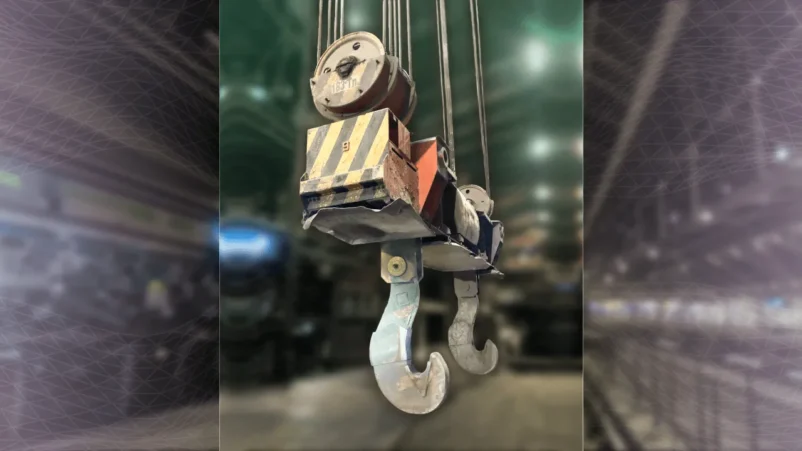
ASME BTH-1 (2017, 2020, 2023) Defines mechanical and structural design requirements for below-the-hook lifting devices and is used in conjunction with ASME B30.20. SDC Verifier uses BTH-1 to evaluate lifting beams and similar members under variable loading.
These ASME-based check sets are intended for use in energy, infrastructure, and industrial lifting projects and are available as predefined logic blocks inside SDC Verifier.
SDC Verifier includes calculation procedures based on selected provisions of ASME standards. The software does not include, reproduce, or distribute the full text of any ASME standard. To apply these checks correctly, users must have lawful access to the relevant ASME publications and follow them in full.
Industries
Types of Analyses
Industries
Types of Analyses
Industries
Types of Analyses
Industries
Types of Analyses
Industries
Types of Analyses
ABS Standards
AIJ Standards
AISC Standards
API Standards
ASME Standards
Australian Standards
British Standards
Bureau Veritas Standards
DIN Standards
DNV Standards
DVS Standards
EN 13001 Standard
Eurocode 3
Eurocode 9
F.E.M. 1.001
FKM Standard
IACS Standards
ISO
Lloyd’s Register (LR) Standards
NORSOK Standards
VDI Standards
SDC Verifier currently includes check sets based on ASME Section VIII Div 2 (2010), ASME B31.8 (2018), and ASME BTH-1 (2017, 2020, 2023). The standards themselves are not distributed with the software.
No. SDC Verifier works directly with your existing FEA model in Ansys, Femap, or Simcenter 3D.
Yes. You can select the required edition (2017, 2020, or 2023) and verify members accordingly without manual reconfiguration.
Yes. Reports are template-based and include all standard-specific results, plots, and tables — ready for clients or certification bodies.