Large structures such as ships and offshore platforms are often made from extensive steel plates that can be relatively thin compared to the overall size of the structure. This brings up an important engineering question: how do we ensure that these thin-walled components do not lose stability under high loads?
The solution is based on stiffener and plate buckling checks. This article explains how to determine the stability of combined sections, what methods are used: hand calculations and structural analysis software like SDC Verifier, and the rigorous classification checks set by standards like Eurocode.
If you want to know how beams and plates fail differently, read about understandingbuckling.
Stiffener Buckling and the Effective Width Concept
This piece is based on SDC Verifier’s CEO and professor, Wouter van den Bos, published on our YouTube channel. For more detailed explanation, see the video:
To analyze stiffener buckling, the methodology treats the stiffener and the adjacent plate material as a combined beam. This combined element possesses a calculated moment of inertia (I).
The key concept in defining this combined element is the effective width. The principle states that the plate width is divided, with half of the plate (up to a specific effective width limit) contributing to the moment of inertia of the stiffener plus plate assembly. This approach ensures that the plate effect is added to the stiffener, recognizing that the plate width contributes up to the yield limit. If a constant compression stress is applied, the combined stiffener plus plate section can buckle together.
For quick hand calculations, the effective width limit is sometimes defined, such as a maximum of 56 times the thickness for S235 steel, or 46 times the thickness for S355 steel.
Designing Using Slenderness Ratio and Hand Calculations
The formulas and curves used in the standards are fundamentally designed for hand calculation, rather than complex Finite Element Analysis (FEA). They allow engineers to quickly estimate stability limits.
Engineers can utilize curves plotting maximum stress against slenderness ratio to improve the design process. If the maximum stress in the plate or beam is known, the curve, depending on the material, directly provides the allowable slenderness ratio. This allowable slenderness ratio can then be used to define the required distance between stiffeners or the length-to-width ratio.
The slenderness ratio of the stiffener plus plate is determined by the area (A) and the combined moment of inertia (I) of the section. By calculating the slenderness ratio, one can determine the buckling risk without needing a full recalculation. These hand calculation methods combine both the yield effect and the ultimate polar buckling effect to give a resulting slenderness ratio.
For illustration in educational contexts, the effective radius of gyration varies significantly depending on the shape:
A section where the web is infinitely thin (plates separate) has one radius of gyration.
A solid square block has a radius of gyration around 28.9% (30%) of its height.
A circle has a radius of gyration that is exactly a quarter of its height.
Image: Ratio of gyration illustration
Eurocode 3 Classification
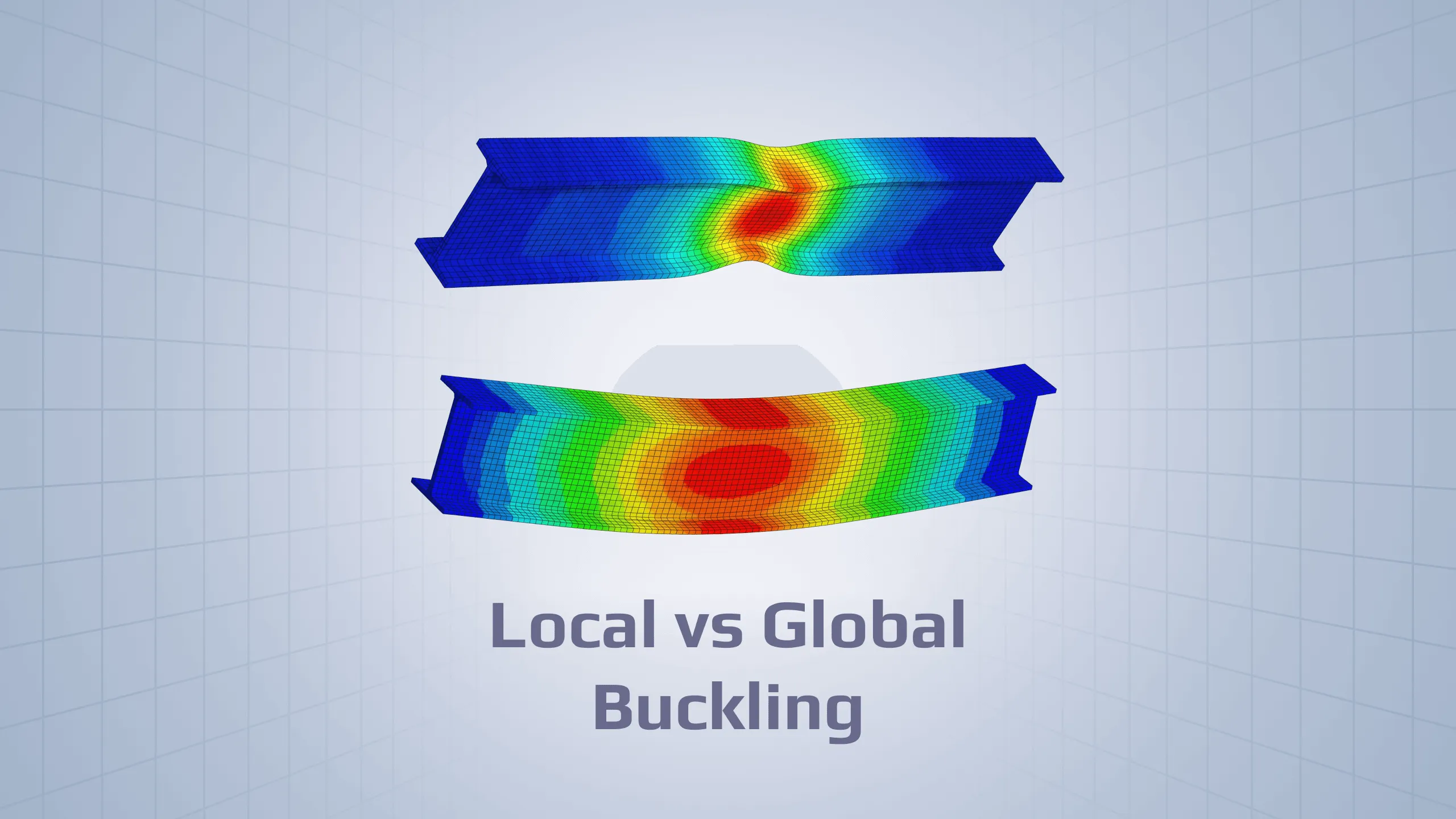
Structural design under Eurocode 3integrates global beam buckling analysis with local plate buckling requirements, which is determined through section classification. The primary goal of this classification is to avoid local plate buckling.
Image: Eurocode 3 standard classification of global and local plate buckling
Classification is based on the width-to-thickness ratio (c/t) of the different elements (flanges and web).
The four classes defined by Eurocode relate the ability of the section to utilize its plastic capacity before local buckling occurs:
Class 1: Permits a plastic hinge with full rotation capacity, meaning the entire section can become plastic and remain stable.
Class 2: Permits a plastic hinge with some rotational capacity left. The design cannot utilize the full plastic moment of inertia, but nearly so.
Class 3: Ensures that the beam can reach the yield stress before local buckling.
Class 4: This class means the shape buckles before reaching the yield limit, and is often excluded from designs for many structures.
Eurocode 3 Plate Buckling Checks in SDC Verifier Software
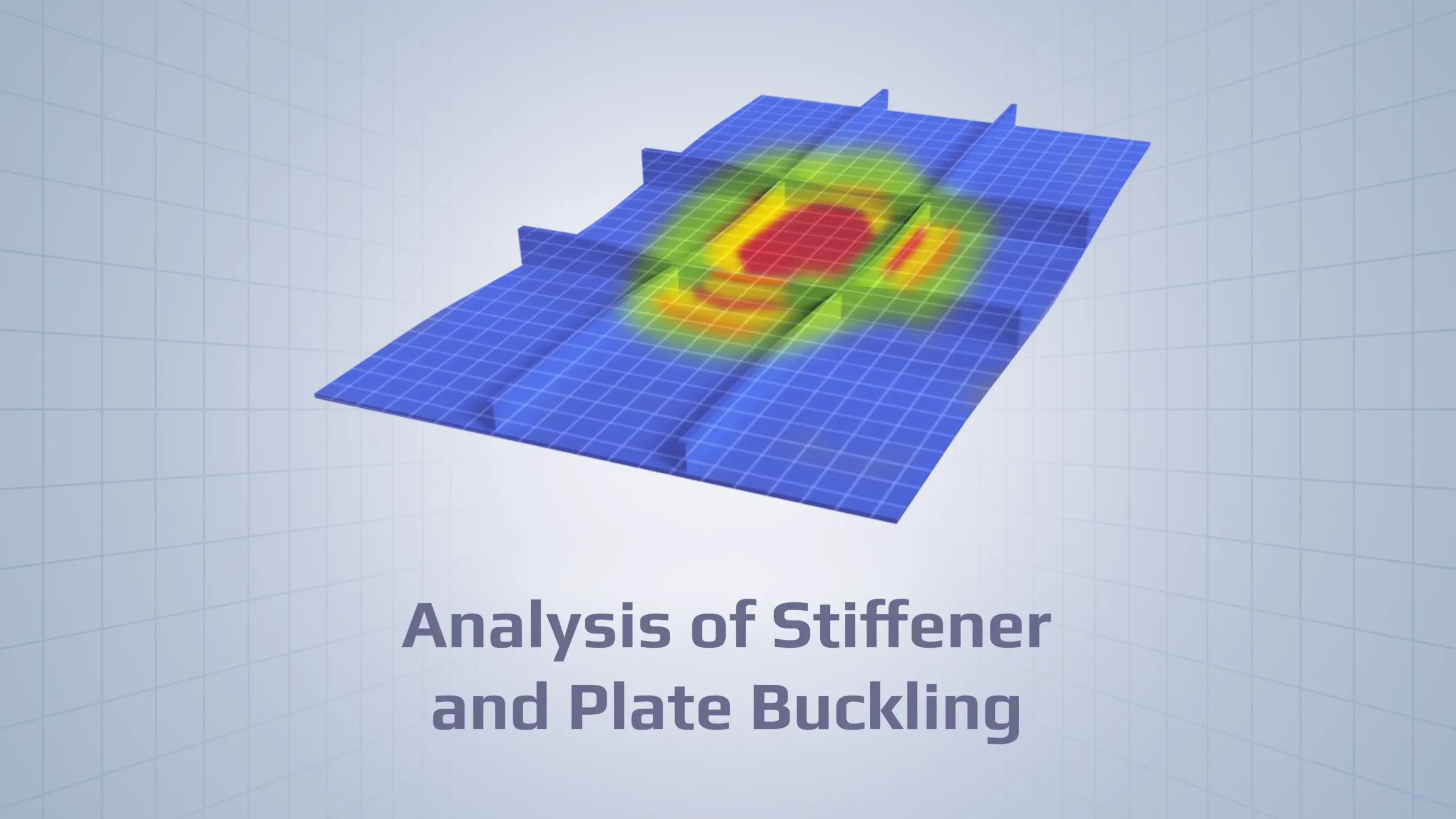
Image: Plate buckling illustration
SDC Verifier includes a dedicated implementation of Eurocode 3 Plate Buckling (EN 1993-1-5, 2006), specifically Chapter 10, to evaluate the stability of stiffened and unstiffened plate elements subjected to in-plane forces. The process is fully automated and designed to work directly with FEA models through geometry recognition and directional stress mapping.
A central component of the workflow is the Panel Finder tool, which automatically detects plate panels and their corresponding stiffeners from the finite element mesh. The implementation supports both CSR-based equivalent dimensions and actual model geometry, offering flexibility for shipbuilding, offshore, civil, and industrial applications.
Image: Automatic detection of plates in Panel finder tool
SDC Verifier converts element-based stresses into panel-oriented principal directions (X, Y, XY) to ensure correct assessment. Plate thickness can be defined manually by the user or taken directly from the element data.
Buckling verification follows the procedures defined in EN 1993-1-5 and uses the critical stress factors provided in Tables 4.1, 4.2, and 5.1 of the standard.
Comparison of Limits
If σ_y ≈ σ_cr for a free external flange (free edge, k≈0.4), then c/t ≈ 18. For internal plates with simple support the comparable limit is ~56, while EC3 uses 42 (with ε-factor for steel grade)
For S235 steel under constant compression (where the material factor is 1), the external flange limit is 14.
The standard uses a factor that adjusts for material strength. For higher strength steels, such as S355, becomes 0.81, making the classification limit stricter (e.g., 14 0.81, approximately 11).
For the internal classification of web plates, the Eurocode limit is 42, compared to 56 in other contexts, and this limit also incorporates the same factor for material grade, making the classification stricter for higher yield strengths.
While Eurocode uses the same core idea, it is slightly more complex as it accounts for stress variation across the element, such as maximum stress at yield varying from the stress at the web connection.
Accounting for Imperfections
Eurocode standard addresses the impact of imperfections in manufacturing by looking at how the section is produced. Instead of calculating the extra moment caused by tolerance deviations, a general tolerance is applied, which depends on the production method (e.g., cold-formed or hot-finished).
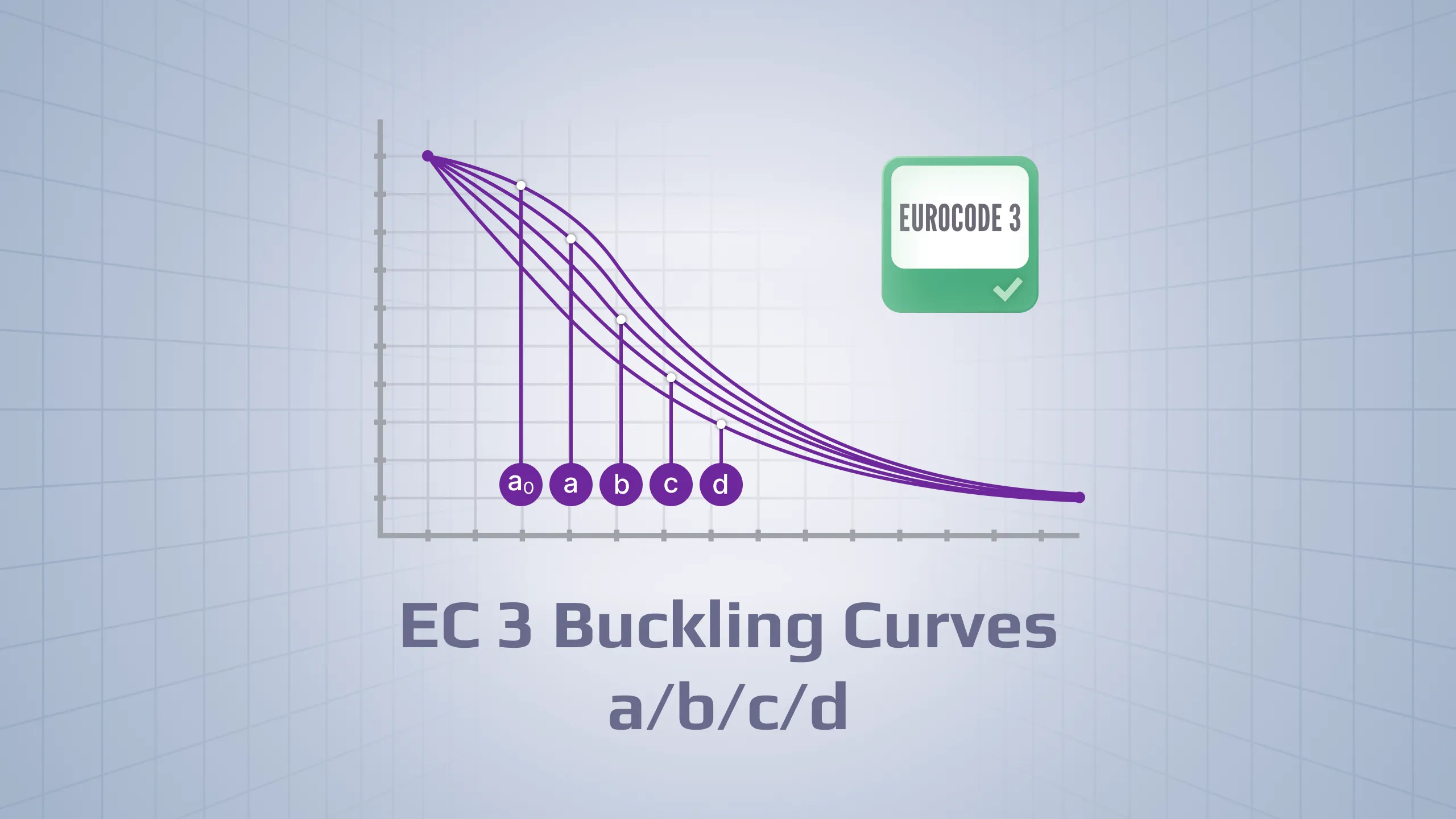
This results in different buckling curves where a reduction factor is applied. Up until a specific slenderness, the yield limit is the defining factor, but beyond that, the appropriate buckling curve is selected based on the tolerance in fabrication. For higher grade steels, the impact of tolerance is relatively small.
Image: Buckling curves illustration
Conclusion
Stiffener and plate buckling are essential aspects of designing thin-walled steel structures, and a clear understanding of effective width and slenderness ratios. Eurocode beam checks combine these elements: the thickness-to-width ratio for classification (plate buckling) and the buckling curves based on tolerances (global beam buckling risk). Software like SDC Verifier providesaccurate and consistent results by applying Eurocode 3 rules directly to FEA models with automated geometry recognition and directional stress mapping.