Bolts are fasteners in countless engineering applications, from large-scale construction to small mechanical assemblies. Bolts play a vital role in securing materials across various engineering applications.
Selecting the right bolt goes beyond just picking one that fits — factors like load-bearing capacity, environmental conditions, and material compatibility must all be considered. This guide will explore how to read bolt specifications, helping you understand what each metric means and why it’s important.
Key Bolt Specifications
Key bolt specifications include diameter, thread pitch, length, material, grade, and coating. These factors determine a bolt’s strength, durability, and suitability for specific applications.
Bolt Dimensions
Bolt metrics define the physical geometry of a bolt and ensure proper compatibility between fasteners, connected parts, and installation requirements. In engineering applications, accurate bolt dimensions are essential not only for assembly but also for load transfer, preload distribution, and compliance with design standards.
The primary bolt characteristics include:
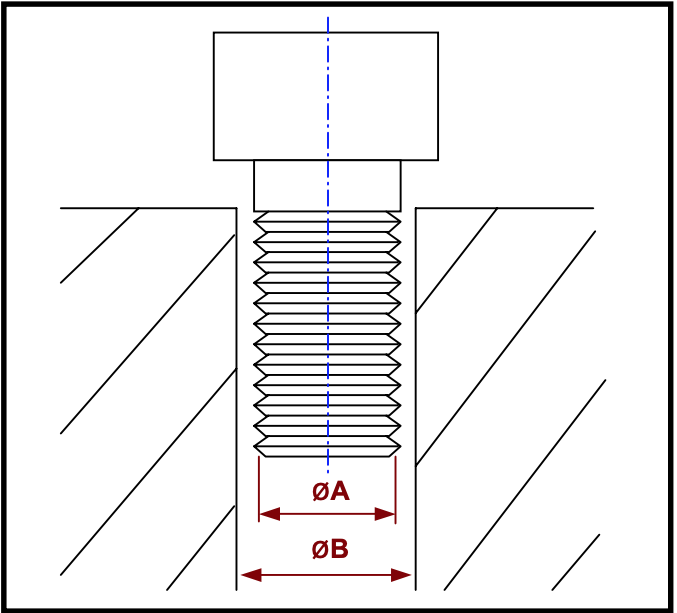
Bolt Diameter — the nominal diameter of the threaded portion, which determines the bolt’s load-carrying capacity and compatibility with nuts and holes.
Bolt Length — the distance from the bearing surface under the head to the end of the bolt, or including the head for countersunk bolts.
Thread Length — the portion of the bolt that contains threads. Some bolts are fully threaded, while others have a partially threaded shank to improve shear performance.
Head Dimensions — including head height and width across flats for hex bolts, which affect wrench size, installation clearance, and torque application.
Shank Length — the unthreaded portion between the head and threads, often important in structural connections where shear forces are transferred through the shank instead of the threads.
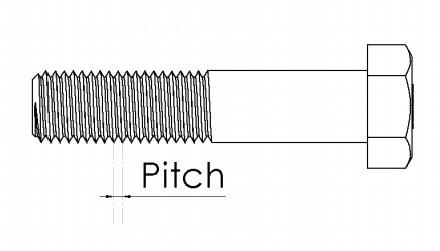
Thread Pitch — the spacing between adjacent threads in metric bolts or threads-per-inch (TPI) in imperial bolts.
Different standards define bolt parameters to ensure interchangeability and manufacturing consistency. For example, ISO standards specify metric bolt dimensions, while ASME and ANSI standards define imperial bolt geometries commonly used in North America.
Understanding bolt dimensions is especially important in structural engineering because incorrect sizing can affect preload behavior, fatigue resistance, and the overall integrity of the connection. Engineers must also consider clearance holes, washer dimensions, and nut engagement to ensure proper installation and performance under load.
Bolt Diameter
The diameter of a bolt is one of the most critical specifications because it directly impacts the bolt’s load-bearing capacity and its fit within pre-drilled holes. Choosing the correct diameter ensures proper alignment, structural integrity, and even load distribution across the assembly. Incorrect sizing can lead to issues like loose fittings, misalignments, or even bolt failure under stress.
Metric Bolts: The metric bolt diameter is measured in millimeters (mm) and is the outermost edge of the thread, known as the major diameter. This diameter is denoted with an “M” prefix. For example, an M10 bolt has a 10 mm diameter, meaning the thread’s widest part measures 10 mm across. This specification is standard across many global industries and is commonly used in European and international applications.
Imperial Bolts: In the imperial system, bolt diameter is measured in inches or fractions of an inch. The most common imperial diameters include 1/4″, 3/8″, and 1/2″. For instance, a 3/8″ bolt has a diameter of 0.375 inches across the widest part of its thread. Imperial bolts are frequently used in North America and in industries that have traditionally adhered to imperial measurements.
Countries in Europe and Asia have adopted the metric system, and even U.S. manufacturers are transitioning to metric standards to simplify production and support international trade. Organizations like ISO and WTO promote metric adoption for uniformity, making metric bolts increasingly relevant in global markets, even where imperial measurements were once dominant.
The choice between metric and imperial bolts often depends on regional industry standards and the type of equipment being worked on. The diameter determines how the bolt will interact with other components like nuts, washers, and fastened material. Too large bolts result in a large hole which may lead to decrease of the base material capacity; while too small bolts will not provide enough bearing capacity.
The material of a bolt is critical because it determines the fastener’s strength, resistance to environmental conditions, and suitability for different applications. Common bolt materials include:
Steel: Steel bolts, available in low-carbon, medium-carbon, or alloy grades, are the most common. They offer high strength and are versatile, but untreated steel may rust in outdoor environments. Medium-carbon and alloy steels provide higher hardness and strength, making them suitable for high-stress applications, though they may lack ductility.
Stainless Steel: Known for its excellent corrosion resistance, stainless steel is ideal for outdoor and marine environments. While it offers good ductility, stainless steel is generally less hard and strong compared to alloy steel.
Brass and Bronze: These materials are often chosen for decorative applications or environments requiring non-magnetic properties, such as electrical systems. They offer moderate strength and resistance to corrosion.
Titanium: Lightweight, strong, and highly corrosion-resistant, titanium bolts are ideal for aerospace and high-performance automotive applications. Titanium combines high strength with excellent ductility but is more expensive and less hard than steel.
Each material type has a unique set of characteristics, making it essential to match the material to the application, particularly in corrosive or high-stress environments.
Bolt Strength
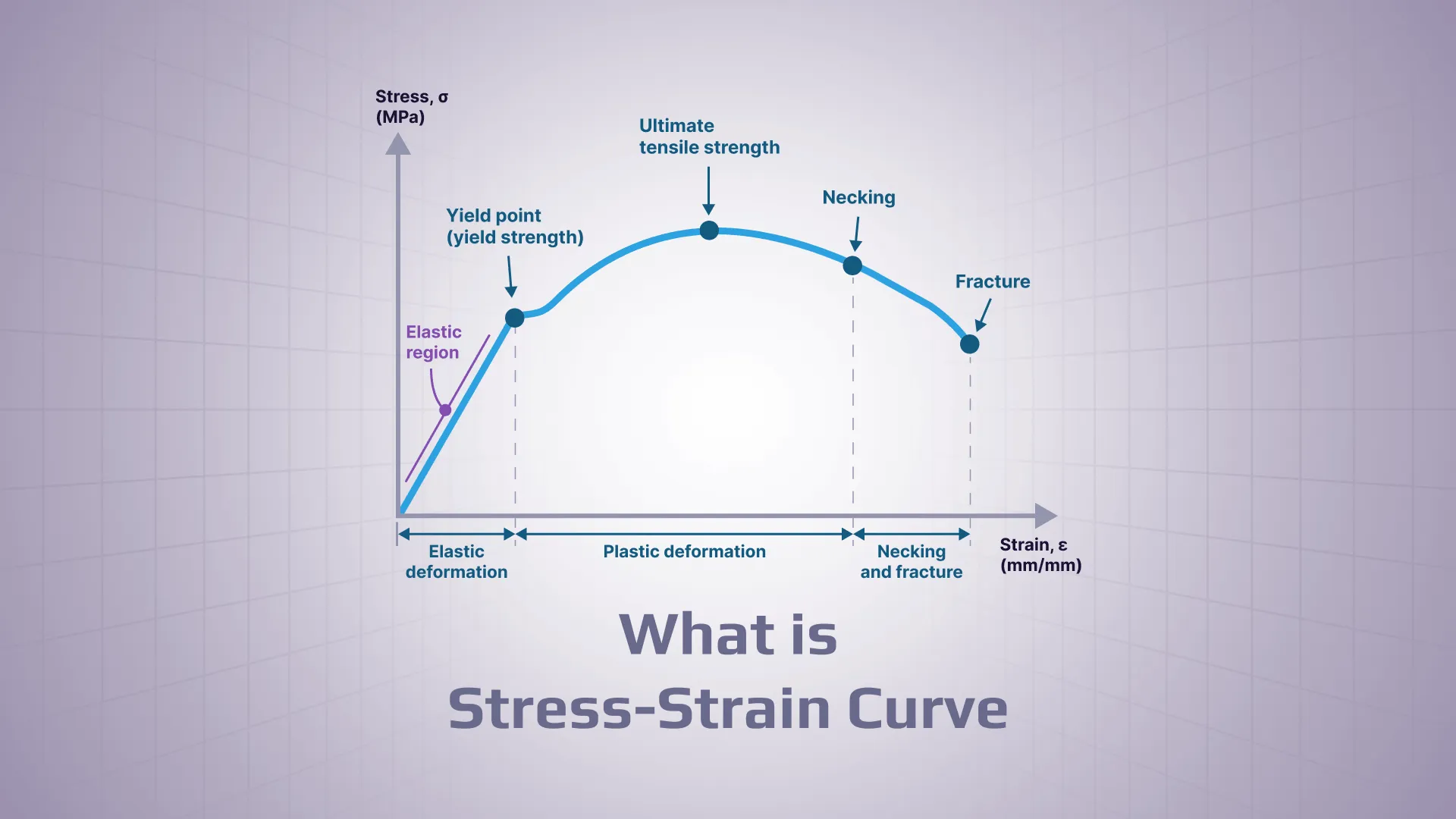
The strength of a bolt is represented by its grade, which indicates its tensile strength(the maximum stress a bolt can support when it is under tensile load). Bolt grades differ between the metric and imperial systems, and understanding their designations is crucial for selecting the appropriate bolt for an application.
Metric Bolt Grades: Metric bolts are typically labeled with numbers like 8.8, 10.9, or 12.9. The first number represents the ultimate tensile strength (UTS) in megapascals (MPa) divided by 100. For example, an 8.8 bolt has a UTS of 800 MPa. The second number represents the yield strength as a fraction of the UTS. For an 8.8 bolt, the yield strength is 80% of the UTS, or 640 MPa.
Imperial Bolt Grades: Imperial bolts are classified by grades like Grade 2, Grade 5, or Grade 8. These grades do not directly reflect tensile strength in psi but are correlated to specific standards. For example, Grade 8 bolts are heat-treated and have a tensile strength of approximately 150,000 psi. However, the grade number reflects the bolt’s performance under standardized testing rather than directly representing its tensile strength in psi.
Selecting the correct grade is critical for ensuring safety and durability, especially in structural or high-stress applications where bolt failure could have serious consequences.
Thread Pitch
Thread pitch refers to the distance between adjacent threads on a bolt’s shaft and plays a significant role in the bolt’s gripping capability, clamping force, and ease of assembly. Essentially, thread pitch indicates how tightly or loosely the threads are wound along the length of the bolt. The correct thread pitch is crucial for ensuring secure fastening, distributing properly load, and preventing loosening under vibration or stress.
Diagram of a hex bolt showing the threaded portion with a labeled “pitch,” which refers to the distance between threads. The image illustrates a key aspect of bolt threading used in fastener specifications. Image: insight-security.com
Thread pitch specifications vary between metric and imperial bolts, and choosing the right one depends on the application requirements, such as load distribution, environmental conditions, and ease of assembly.
Metric Bolts:In the metric system, thread pitch is measured in millimeters and denotes the distance between two adjacent threads. This measurement can be listed alongside the bolt diameter. For example, in an M10x50 bolt, the ‘50‘ indicates the lenght from bolt head till the end. Fine-threaded bolts have smaller pitch values, meaning the threads are more closely spaced, while coarse-threaded bolts have larger pitch values. Metric bolts typically follow international standards (ISO) that ensure industries uniformity. Fine-thread bolts are preferred in applications requiring precise adjustments or where the bolt needs to withstand high tensile stress, while coarse-thread bolts are better for quick assembly, especially in environments prone to dirt or corrosion.
Imperial Bolts: In the imperial system, thread pitch is not measured by distance but by threads-per-inch (TPI) — the number of threads in a single inch along the bolt’s shaft. For example, a bolt with 16 TPI means 16 threads within one inch of the bolt’s length. Higher TPI values indicate fine-thread bolts, ideal for a firmer grip in applications requiring more precise clamping force. Lower TPI values correspond to coarse-thread bolts, generally easier to assemble and are more resistant to damage in rugged conditions. Imperial bolts are commonly used in industries following U.S. or British standards.
Fine vs. Coarse Threads:
Fine-thread bolts (closely spaced threads) provide greater tensile strength and perform better in vibratory environments due to their reduced potential for loosening.
However, under fatigue loading, fine threads are more prone to stress concentrations at the thread roots, which can lead to higher stress cycling and increased susceptibility to fatigue failure over time. These bolts are commonly used in aerospace and automotive applications where precise tension is necessary, but the higher engagement frequency of fine threads must be considered for fatigue-prone scenarios.
Coarse-thread bolts (widely spaced threads) are less likely to strip during assembly, especially when working with softer materials. Their wider thread spacing also helps distribute stress more evenly, making them less prone to fatigue under cyclical loads. Additionally, coarse threads are easier to fasten, making them ideal for heavy-duty applications or environments with dirt, debris, or corrosion, such as in construction and machinery.
The selection of thread pitch depends on the fastened material and the bolt’s intended use. Fine threads are optimal for high-precision work, while coarse threads excel in heavy-duty applications and challenging environments. Understanding thread pitch ensures that the correct bolt type is selected to maximize durability and performance.
Drive Type and Head Style
The drive type refers to the tool interface on the bolt head, determining how the bolt is tightened or loosened. The drive types include:
Hex Drive: The most common drive type, typically used with a wrench or socket.
Phillips Drive: A cross-shaped drive used with a Phillips screwdriver.
Torx Drive: A star-shaped drive that allows for better torque transfer without stripping the bolt.
The head style plays a key role when choosing bolts for an application, as it affects both the installation process and how forces are distributed across the material. Three common head styles are:
Hex Head: The most widely used bolt head, offering a large surface for applying torque. This head style provides solid clamping force, making it suitable for applications requiring high-strength connections.
Countersunk (or Flat) Head: Designed to sit flush with the material, often used in countersunk holes. Countersunk heads distribute clamping forces evenly across the material’s surface, reducing stress concentrations at the point of contact. This is particularly beneficial for applications where smooth surfaces and secure fastening are crucial, such as in structural or aesthetic installations.
Round Head: A dome-shaped head often used for aesthetic purposes or in applications where a low-profile finish is not needed. While round heads are less effective at distributing clamping forces compared to hex or countersunk heads, they provide sufficient strength for low to moderate stress applications.
The choice of drive type and head style affects both the ease of installation and the final appearance of the assembly.
Bolt Length
Bolt length is another crucial specification, measured from the bottom of the head to the tip of the threaded section. The length of a metric bolt is measured from the bottom of the head to the tip of the threaded shaft, similar to imperial bolts.
For socket head, pan head, button head, and hex head bolts, the length is measured from the underside of the bolt head. In contrast, for flat head bolts, the length includes the height of the head itself, and for dome head bolts, it’s measured from the highest point of the curved head.
Choosing the correct bolt length is essential to ensure a secure assembly. While the bolt grade and diameter significantly impact preloading—commonly set at 70% of the yield strength—length plays a different role. The bolt must have enough length to ensure that the nut engages a sufficient number of threads for a reliable grip.
Additionally, the length should adequately cover the total thickness of all connection plates, accounting for any washers and nuts needed for assembly. While shorter bolts may be suitable for thinner materials or specific design constraints, they must still engage enough threads to achieve proper preloading and reduce the risk of failure. Conversely, longer bolts, often used in thicker or stacked materials, should not be excessively long to avoid complications with tensioning and tightening.
Coating and Plating
Bolts are frequently coated or plated to improve their resistance to corrosion, weather, and environmental damage, especially when exposed to moisture, chemicals, or extreme temperatures. The type of coating used can significantly extend or reduce the bolt’s fatigue life, as the study “The Effect of Coating Type on Bolt Fatigue Life” shows. Here are some standard coatings and their applications:
Zinc Plating: A thin layer of zinc is electroplated onto the bolt’s surface to protect it from corrosion. Zinc-plated bolts are commonly used in outdoor applications or mildly corrosive environments. While zinc plating offers elemental corrosion resistance, it is not ideal for highly corrosive or extreme conditions, as the layer is relatively thin and can wear off over time.
Hot-Dip Galvanization: This involves dipping the bolt into molten zinc, creating a much thicker zinc coating than electroplating. Hot-dip galvanization provides superior corrosion resistance and is commonly used for bolts exposed to harsh environments, such as in marine applications, bridges, and outdoor structures. The thicker coating also increases the bolt’s durability against mechanical damage.
Cadmium Plating: Cadmium plating is employed for environments requiring extreme corrosion resistance and lubrication. It provides a robust barrier against corrosion and is often used in aerospace and military applications. However, its use has declined in recent years due to environmental concerns surrounding cadmium’s toxicity.
Black Oxide: Black oxide coatings are primarily for aesthetic purposes, giving bolts a sleek, matte black finish. While they provide minimal corrosion protection compared to zinc or galvanized coatings, they offer some resistance in dry, indoor environments. Black oxide-coated bolts are often used in automotive or industrial applications where appearance is important, but extreme corrosion resistance is not required.
The choice of coating depends on the bolt’s intended environment and application. Hot-dip galvanized bolts offer the best protection against corrosion for outdoor or marine applications, while zinc-plated bolts are suitable for less extreme conditions. Black oxide is mainly chosen for its appearance rather than its protective properties.
Below is a comprehensive table summarizing key ASTM specifications for bolts, nuts, washers, plating, and materials used in structural and general-purpose applications.
Category
Specification
Description
Bolt Specifications
ASTM A193
Alloy steel and stainless steel bolting materials for high temperature or high pressure service.
ASTM A307
Carbon steel bolts and studs, 60,000 psi tensile strength.
ASTM A320
Alloy steel and stainless steel bolting materials for low temperature service.
Ferritic malleable castings intended for general use.
ASTM A48
Gray iron castings intended for general use.
ASTM A536
Castings made of ductile iron, also called spheroidal or nodular iron.
ASTM A668
Untreated and heat-treated carbon and alloy steel forging for general industrial use.
Nut Specifications
ASTM A194
Carbon and alloy steel nuts for bolts for high pressure and high temperature service.
ASTM A563
Standard specification for carbon and alloy steel nuts.
ASTM F594
Stainless steel nuts.
Plating Specifications
ASTM A153
Zinc coating (hot dip) on iron and steel hardware.
ASTM B695
Mechanically deposited zinc coatings on iron and steel.
ASTM F1941
Electrodeposited coatings on threaded fasteners (Zinc plating).
ASTM F2329
Zinc coating, hot dip, for bolts, screws, washers, nuts, and special threaded fasteners.
Rebar Specifications
ASTM A615
Deformed and plain carbon steel bars for concrete reinforcement.
ASTM A706
Deformed and plain low alloy steel bars for concrete reinforcement with enhanced weldability.
Steel Specifications
ASTM A36
Carbon steel shapes, plates, and bars in general structural purposes.
ASTM A572
High strength, low-alloy structural steel shapes, plates, and bars.
ASTM A588
High strength, low-alloy structural steel improved atmospheric corrosion resistance.
Washer Specifications
ASTM F844
Unhardened, general purpose, flat washers.
ASTM F436
Hardened steel washers.
ASTM F959
Compressible washer type direct tension indicators (DTIs) in diameters 1/2 to 1-1/2 inches.
ASTM F2437
Compressible washer type direct tension indicators (DTIs) in diameters 1/4 to 2-1/2 inches.
How to Select the Right Bolt?
When selecting a bolt, you must consider the combined effects of all these specifications. For example, a structural connection will require a high-strength, corrosion-resistant bolt with the proper diameter and thread pitch to ensure long-term stability. Additionally, achieving the correct preload through proper torqueing is critical for bolt performance under varying load conditions. Tools like the SDC Verifier Bolt Check App can be extremely helpful in verifying whether the bolt meets the required engineering standards, especially for applications involving fatigue or load-bearing conditions.
Environmental Considerations
It’s essential to consider environmental conditions when selecting a bolt. For instance, a bolt used in a marine setting must resist saltwater corrosion, requiring materials like stainless steel or titanium, possibly with galvanization for extra protection. On the other hand, high-temperature applications may require bolts made from specialty alloys capable of withstanding extreme heat without losing strength. Engineers should also account to temperature cycling, as repeated thermal expansion and contraction can lead to stress relaxation in materials like stainless steel, potentially compromising the bolt’s performance over time.
Load Requirements
Understanding the expected load on the bolt is critical. In high-stress applications, selecting the appropriate bolt grade and diameter is necessary to ensure the fastener won’t fail under load. For fatigue or cyclic loading applications, the bolt’s ability to withstand these forces over time should be analyzed, often through engineering software.
Conclusion
Bolt specifications, from diameter and thread pitch to material and grade, are integral to ensuring proper function and safety in any assembly. By understanding these key properties, you can make informed decisions, ensuring that the bolts you select are suited to your application’s environmental and mechanical demands.
For engineers tasked with ensuring compliance with industry standards and performance under stress, tools like SDC Verifier provide invaluable support, especially in complex structural applications. When you understand bolt specifications, you can confidently select the correct fasteners for your project, ensuring long-term durability, safety, and performance.